In honor of Beethoven's Birthday, a twist of a reminder of the wonderful conclusion of his Fifth Symphony. Enjoy!! (This is one of my favorite poems).
Another Reason Why I Don't Keep A Gun In The House
The neighbors' dog will not stop barking.
He is barking the same high, rhythmic bark
that he barks every time they leave the house.
They must switch him on on their way out.
The neighbors' dog will not stop barking.
I close all the windows in the house
and put on a Beethoven symphony full blast
but I can still hear him muffled under the music,
barking, barking, barking,
and now I can see him sitting in the orchestra,
his head raised confidently as if Beethoven
had included a part for barking dog.
When the record finally ends he is still barking,
sitting there in the oboe section barking,
his eyes fixed on the conductor who is
entreating him with his baton
while the other musicians listen in respectful
silence to the famous barking dog solo,
that endless coda that first established
Beethoven as an innovative genius.
~ Billy Collins
Showing posts with label Classical Music. Show all posts
Showing posts with label Classical Music. Show all posts
16 December, 2008

Happy Birthday, Beethoven
Happy Birthday, Beethoven!
Beethoven was my first favorite composer that I enjoyed as a child. My mother used to play his "Moonlight Sonata" on our old piano when I was in middle school. In high school, I studied Beethoven for my Music Appreciation class my senior year, and wrote a long paper about him. He has always been a personal favorite of mine, even as I grew to appreciate other composers throughout the years.
Musically yours,
Javamom
Beethoven was my first favorite composer that I enjoyed as a child. My mother used to play his "Moonlight Sonata" on our old piano when I was in middle school. In high school, I studied Beethoven for my Music Appreciation class my senior year, and wrote a long paper about him. He has always been a personal favorite of mine, even as I grew to appreciate other composers throughout the years.
Musically yours,
Javamom
10 November, 2008

10 December, 2007
Messiah Sing-along

One of our Christmas traditions...singing all of Handel's Messiah.

...and getting to see a good family friend whom we haven't seen in years, Miss Barbara! She moved back home to Tennessee, so this is the event and the friends for which she returns, ever-so-briefly. She had to fly out the very next morning. (I'm the one making the silly face on the left)

The Tenors - each group or soloist stands when they sing. On the choruses, we all stand.
The host himself is in shorts! It was over 80 degrees last Saturday. I gave him only a little bit of a hard time... he is the host after all! Hubby had the same T-shirt that he wanted to wear, but I cracked the whip :-).

The sopranos. Cathy, our hostess, is on the right in the red blouse.

The basses - Hubster is in the white shirt and red tie :-)

My fellow altos, although I did sing one of the soprano solos (I'm actually a mezzo-soprano)
"How beautiful are the feet of them that bring the gospel of peace..."
My other favorite (alto) solo...
"He shall feed his flock like a shepherd, and he shall gather the lambs with his arms, with his arms...."
This was our best year so far. It gets easier (but that is a relative term!) each year.
This work is so glorious, and being in the middle of it brings goose bumps and causes the little hairs on our arms to raise.
10 September, 2007
Symphony Season has begun!
Ah, yes...the peace and harmony of a good symphony. It doesn't get much better than this. As I've written in the last year or so, Hubster and I don't go out to eat but a handful of times a year. We rarely take the whole family out...(But we try to cook well!) We spend what small portion we allocate from our family budget toward date nights/entertainment for tickets to the symphony instead of meals out or weekends at a hotel. Food only nourishes for a few hours, while live music can stay with us always.
Our orchestra started out in a patriotic tone, playing the Star-Spangled Banner. Nice touch, that!
Next came the Overture to Candide by Leonard Bernstein. Nicely done; I love Bernstein. He is the first conductor I remember admiring as a youth.
After that, a most horrid and modern piece, the likes of which I have not had to sit through in a few years. It was a Violin Concerto composed in 1993 by John Adams (almost 35 minutes long). Some folks like the style and appreciate the instrumentalists' ability to execute complicated timing against triads and chromatic chord structures of different pitches within the different instrument families. My sensibilities have not been sufficiently trained to appreciate these confusing sounds which feel chaotic to my senses. I had been trained in instrumental and symphonic music. I was even in a wind symphony for brief spurts during high school and even into college playing the bassoon, though my first instrument was the flute.
There was one section that was interesting, and it was quite short. The bassoons had a nice run for about 12 bars, but that was all that held my attention. The percussion did some interesting things, but overall, it was the type of music that sets one's mood or demeanor on edge. It reminded me of background music for a scary or suspenseful movie.
Thank the Lord for intermission and then a fantastic rendition of Tchaikovsky's Symphony No. 2 in C minor. Because we swapped our normal tickets for the weekend matinée showing, we were able to score some great seats at about the fifth row. The Tchaikovsky made the whole trip to the city very much worth it. Plus our old maestro was back in town for this opening weekend. He is fun to watch conducting bouncy pieces that crescendo and grow, as he is apt to hop about.
What fun! I wonder what our new conductor will be like. He has guest conducted here before, but I do not remember what he did. I'll have to go look through my old playbills to see. I do save the playbills, for they contain wonderful information and background on the pieces played, not to mention biographical information on the composers and any soloists.
How do my readers prefer to spend their entertainment dollars?
Javamom, whose second item for entertainment spending for the family is on a Netflix subscription.
Our orchestra started out in a patriotic tone, playing the Star-Spangled Banner. Nice touch, that!
Next came the Overture to Candide by Leonard Bernstein. Nicely done; I love Bernstein. He is the first conductor I remember admiring as a youth.
After that, a most horrid and modern piece, the likes of which I have not had to sit through in a few years. It was a Violin Concerto composed in 1993 by John Adams (almost 35 minutes long). Some folks like the style and appreciate the instrumentalists' ability to execute complicated timing against triads and chromatic chord structures of different pitches within the different instrument families. My sensibilities have not been sufficiently trained to appreciate these confusing sounds which feel chaotic to my senses. I had been trained in instrumental and symphonic music. I was even in a wind symphony for brief spurts during high school and even into college playing the bassoon, though my first instrument was the flute.
There was one section that was interesting, and it was quite short. The bassoons had a nice run for about 12 bars, but that was all that held my attention. The percussion did some interesting things, but overall, it was the type of music that sets one's mood or demeanor on edge. It reminded me of background music for a scary or suspenseful movie.
Thank the Lord for intermission and then a fantastic rendition of Tchaikovsky's Symphony No. 2 in C minor. Because we swapped our normal tickets for the weekend matinée showing, we were able to score some great seats at about the fifth row. The Tchaikovsky made the whole trip to the city very much worth it. Plus our old maestro was back in town for this opening weekend. He is fun to watch conducting bouncy pieces that crescendo and grow, as he is apt to hop about.
What fun! I wonder what our new conductor will be like. He has guest conducted here before, but I do not remember what he did. I'll have to go look through my old playbills to see. I do save the playbills, for they contain wonderful information and background on the pieces played, not to mention biographical information on the composers and any soloists.
How do my readers prefer to spend their entertainment dollars?
Javamom, whose second item for entertainment spending for the family is on a Netflix subscription.
09 April, 2007
Pearls Before Breakfast
It was a chilly weekend, most of which was spent cleaning or with family and friends, celebrating a wedding, helping with yard work, deep cleaning home, hostessing 12 boys who rolled our house early Friday a.m. AND left easter eggs for us, returning later Saturday a.m. to participate in airsoft wars with my boys. Then finally cooking for and hostessing Easter company.
Whilst downloading e-mail once or twice during that time, I was sent a link (from two different sources) about a social experiment done by some staffers at The Washington Post magazine, and one of the most popular classical violinists of our time. Being a Josh Bell fan, I was drawn to go check it out for myself, but had to wait until this morning, after all our busy fun of the weekend.
The article is long, but wonderful, as it is a very thorough (yet maybe somewhat flawed) study in one microcosm of time. It is still an excellent experiment, of which the outcome is not too surprising. I did enjoy the follow up comments included within the article, but comments from readers are funny to thoughtful, as well. Maybe some of them miss the point or take it too seriously...which is what makes it funny (to me).
Whilst downloading e-mail once or twice during that time, I was sent a link (from two different sources) about a social experiment done by some staffers at The Washington Post magazine, and one of the most popular classical violinists of our time. Being a Josh Bell fan, I was drawn to go check it out for myself, but had to wait until this morning, after all our busy fun of the weekend.
The article is long, but wonderful, as it is a very thorough (yet maybe somewhat flawed) study in one microcosm of time. It is still an excellent experiment, of which the outcome is not too surprising. I did enjoy the follow up comments included within the article, but comments from readers are funny to thoughtful, as well. Maybe some of them miss the point or take it too seriously...which is what makes it funny (to me).
My dh cringes and does not like it when violin players swoop and sway "too much" in his opinion :-). But we enjoy Bell's music...okay *I* enjoy Bell's artistry in music. Dh prefers the cello or double bass...and I do like seeing/hearing him at a live performance.
(Side note: The movie he doubled in...The Red Violin...interesting yet a little creepy!)
Back to some quotes from the article:
"Bell has played, literally, before crowned heads of Europe. Why the anxiety at the Washington Metro?"
"When you play for ticket-holders," Bell explains, "you are already validated. I have no sense that I need to be accepted. I'm already accepted. Here, there was this thought: What if they don't like me? What if they resent my presence . . ."
Context matters. I also think timing matters.
The article continues:
Next, the article's writer points out that ALL children strained and tried to stop, look, and listen, but were forced onward by their parents.
Back to some quotes from the article:
"IF A GREAT MUSICIAN PLAYS GREAT MUSIC BUT NO ONE HEARS . . . WAS HE REALLY ANY GOOD?"
"Bell has played, literally, before crowned heads of Europe. Why the anxiety at the Washington Metro?"
"When you play for ticket-holders," Bell explains, "you are already validated. I have no sense that I need to be accepted. I'm already accepted. Here, there was this thought: What if they don't like me? What if they resent my presence . . ."
Context matters. I also think timing matters.
The article continues:
"Kant said the same thing. He took beauty seriously: In his Critique of Aesthetic Judgment, Kant argued that one's ability to appreciate beauty is related to one's ability to make moral judgments. But there was a caveat. Paul Guyer of the University of Pennsylvania, one of America's most prominent Kantian scholars, says the 18th-century German philosopher felt that to properly appreciate beauty, the viewing conditions must be optimal."
I agree!Next, the article's writer points out that ALL children strained and tried to stop, look, and listen, but were forced onward by their parents.
The writer quotes my favorite modern poet (no secret to my readers with all the Billy Collins references plastered on and throughout the booksncoffeehaus blog :-)
"Billy Collins once laughingly observed that all babies are born with a knowledge of poetry, because the lub-dub of the mother's heart is in iambic meter. Then, Collins said, life slowly starts to choke the poetry out of us. It may be true with music, too."
The article wraps up thusly:
"But he (Bell) is back in the States this week. He has to be. On Tuesday, he will be accepting the Avery Fisher prize, recognizing the Flop of L'Enfant Plaza as the best classical musician in America."
I like a person who can laugh at themselves and roll with life.
It's pretty inspiring, actually :-).
Javamom
17 March, 2007
Mellow Saturday of Reading and Music

Currently listening to Edgar Meyer on double bass with Béla Fleck, while making up my own chocolate syrup from cocoa powder and sugar. This concoction is for a peppermint mocha that I'm making this late Saturday morning to sip whilst I read some Charlotte Mason for book club.
It is so quiet in the house, as our four jr. high and high schoolers had a lock-in with their church youth group friends or stayed at friends' homes. I'm very glad, as we had co-op, so I was "wiped out" from the time and energy that it takes for the planning and executing of a successful day. The middle two are back now, but fast asleep, of course! I hear they had a wonderful time of snacks, games, and even a 2 a.m. worship time that DD got to serve in by her preparation of the set and playing the bass guitar. Oldest son is with his best buddies-four, as one of their own has returned from college for spring break, so they have gotten to catch up and have good discussions, etc.
Most of Edgar Meyer's music (that I've heard thanks to Dread Pirate Sparse-beard) is a wonderful and interesting amalgam of sounds. In his own words~
“Most of the music I’ve become interested in is hybrid in its origins…Classical music, of course, is unbelievably hybrid. Jazz is an obvious amalgam. Bluegrass comes from eighteenth-century Scottish and Irish folk music that made contact with the blues. By exploring music, you’re exploring everything.” – Edgar Meyer
Click here to watch a clip of Edgar Meyer and Béla Fleck playing a bit of Bach on double bass and banjo, then giving an interview together on A & E's "Breakfast With The Arts."
The last time we went to see the symphony, we were given free tickets which placed us right behind the orchestra on the very front row. I always wondered what that would be like, with the whole audience looking right at this section, where the chorus sits when it joins the symphony.
We quickly forgot about the audience and got lost in the music. I had an absolutely wonderful time being so close that we could follow the conductor and watch his expressions, but also being so close that I could read the music of several instrument sections. That was an unexpected surprise! Being in these seats also meant that we were directly behind the percussion section. I have come to enjoy our orchestra's percussionists immensely, so this was another treat. It was as close to being back in the band (4th grade through high school, where I played flute and bassoon) or symphony (college-bassoon only) as I've been in decades.
James Galway, my childhood hero, played several times both before and after the intermission. That was the main reason we sought tickets this particular night. This was one of our best symphony visits, ever!
Take time to enjoy the music!
Javamom
22 January, 2007
Brahms
Brahms is sublime (The composer, not Braum's, the ice cream shop, LOL...my brain went there, even though they are not spelled the same).
More specifically, his Symphony No. 3 in F major...
Lots of highlights on the bassoon (what I played in my best years of high school and college) and oboe sections, and the contra bassoon has the whole stage to himself a time or two! Wow!
And Les Préludes, Symphonic Poem No. 3 by Franz Liszt is majestic and divine! Click on the title to hear a sample. Although, I just noticed that the sample is from one of the quieter sections. Maybe I'll dig around later to find a better sample!
I didn't want the weekend to end!
More specifically, his Symphony No. 3 in F major...
Lots of highlights on the bassoon (what I played in my best years of high school and college) and oboe sections, and the contra bassoon has the whole stage to himself a time or two! Wow!
And Les Préludes, Symphonic Poem No. 3 by Franz Liszt is majestic and divine! Click on the title to hear a sample. Although, I just noticed that the sample is from one of the quieter sections. Maybe I'll dig around later to find a better sample!
I didn't want the weekend to end!
21 January, 2007
We got to see and hear...
Jean-Yves Thibaudet....The Pianist who recorded the music for the newest Pride and Prejudice movie. He is fantastic! I'll share more about it later! We're off to go catch the movie, "Miss Potter" which is about part of the life of Beatrix Potter. I'll include one more review of the movie here.
My own review forthcoming...!
Javamom
My own review forthcoming...!
Javamom
19 May, 2006
Mahler
This year, Hubster and I got to experience the music of Gustav Mahler, live. Earlier in the symphony season, at our city's symphony center, we heard Mahler's first symphony, also known as The Titan. More recently, we heard Mahler's Second, also known as The Resurrection Symphony. Both are *stunning*. Mahler uses the maximum number of instruments for maximum effect! Two sets of Timpani...two harps, and so much more. Although I GREATLY enjoyed the moments (beginning in the fourth movement, before the mezzo-soprano begins) that the contrabassoon (one of my favorite instruments :-) takes center stage in The Resurrection Symphony, DH and I both agreed that we probably like Symphony Number One the best, as it exhibited the versatilities of all of the instrument families so well. Each family was showcased throughout, as the major themes moved through the sections at different times, rather like a wave of music.
Highlight from Symphony #2 : the violas played sixteen or more measures on their instruments as if they were playing guitars. I forget the technical term for this.
Another major highlight of our symphony visits is any time the Symphony Chorus (somewhere around 200 voices strong?) join the symphony for a work, we are inspired and moved. It could be Tchaikovsky's 1812 Overture, Beethoven's Ode To Joy, Brahm's Requiem, Orff's Carmina Burana, or The Titan! We have enjoyed them all. I love how the voices just wash over the whole symphony hall. I just close my eyes and get caught up in the close chords and suspensions and resolutions of the altos, tenors, and baritones. One time, the chorus was singing not onstage, but from an upper room in the symphony hall. The voices echoed through windows high up in the hall. It was beautiful and a bit haunting. *sigh*
This is one of the ways Hubby and I schedule in a monthly date night. Sometimes we go out to eat, but I'd rather spend the time/money on beautiful music.
Our conductor is moving on to better things, conducting at famous symphony halls over Europe. We are sad to see him go, as he is so dynamic. He would often give a nice introduction to a work before beginning it, so we could have an insight to why HE likes a given piece. The handbills fill in all of the other details. I just enjoy hearing a conductor tell me what it means to him.
Here is the text of Mahler's Symphony Number Two (from Wikipedia) ~ Enjoy!!
Note: This text has been translated from the original German to English on a very literal and line-for-line basis, without regard for the preservation of meter or rhyming patterns.
Fourth Movement
Text from Des Knaben Wunderhorn
Original German
Urlicht
O Röschen rot!
Der Mensch liegt in größter Not!
Der Mensch liegt in größter Pein!
Je lieber möcht ich im Himmel sein.
Da kam ich auf einen breiten Weg:
Da kam ein Engelein und wollt’ mich abweisen.
Ach nein! Ich ließ mich nicht abweisen!
Ich bin von Gott und will wieder zu Gott!
Der liebe Gott wird mir ein Lichtchen geben,
Wird leuchten mir bis in das ewig selig Leben!
In English
Primeval Light
O red rosebud!
Man lies in deepest need!
Man lies in deepest pain!
I would rather be in heaven.
I came upon a broad path;
A little angel came and wanted to send me away.
Ah no! I would not be sent away!
I am from God and will return to God!
The dear God will give me a little light,
Which will light my way to eternal blessed life!
Fifth Movement
Note: The first eight lines were taken from the ode Aufersteh'n by Friedrich Gottlieb Klopstock. Mahler omitted the final four lines of this ode and wrote the rest himself (beginning at "O glaube").
Original German
Aufersteh'n, ja aufersteh'n wirst du,
Mein Staub, nach kurzer Ruh'!
Unsterblich Leben!
wird, der dich rief, dir geben!
Wieder aufzublüh'n wirst du gesät!
Der Herr der Ernte geht
und sammelt Garben
uns ein, die starben!
O glaube, mein Herz, o glaube:
Es geht dir nichts verloren!
Dein ist, ja dein, was du gesehnt!
Dein, was du geliebt, was du gestritten!
O glaube: Du wardst nicht umsonst geboren!
Hast nicht umsonst gelebt, gelitten!
Was entstanden ist, das muß vergehen!
Was vergangen, auferstehen!
Hör auf zu beben!
Bereite dich zu leben!
O Schmerz! Du Alldurchdringer!
Dir bin ich entrungen!
O Tod! Du Allbezwinger!
Nun bist du bezwungen!
Mit Flügeln, die ich mir errungen,
In heißem Liebesstreben,
Werd’ ich entschweben
Zum Licht, zu dem kein Aug’ gedrungen!
Sterben werd’ ich, um zu leben!
Aufersteh'n, ja aufersteh'n wirst du,
mein Herz, in einem Nu!
Was du geschlagen,
zu Gott wird es dich tragen!
In English
Rise again, yes, you shall rise again,
my dust, after brief rest!
Immortal life
will be given by Him who called you!
You are sown to bloom again.
The Lord of the harvest goes
and gathers sheaves of us,
who have died.
O believe, my heart, believe:
Nothing is lost to you!
All you have desired is yours, yes, yours!
Yours, what you have loved and fought for!
O believe, you were not born in vain!
You have not lived or suffered in vain!
All that is created must perish.
All that has perished rises again.
Cease trembling!
Prepare to live!
O Pain, all-pervading,
I have escaped from you!
O Death, all-conquering,
now you are conquered!
With wings which I have won
In love’s ardent striving,
I shall soar upwards
to the light which no eye has penetrated!
I shall die in order to live!
Rise again, yes, you shall rise again,
my heart, in an instant!
Your beating
shall lead you to God!
Highlight from Symphony #2 : the violas played sixteen or more measures on their instruments as if they were playing guitars. I forget the technical term for this.
Another major highlight of our symphony visits is any time the Symphony Chorus (somewhere around 200 voices strong?) join the symphony for a work, we are inspired and moved. It could be Tchaikovsky's 1812 Overture, Beethoven's Ode To Joy, Brahm's Requiem, Orff's Carmina Burana, or The Titan! We have enjoyed them all. I love how the voices just wash over the whole symphony hall. I just close my eyes and get caught up in the close chords and suspensions and resolutions of the altos, tenors, and baritones. One time, the chorus was singing not onstage, but from an upper room in the symphony hall. The voices echoed through windows high up in the hall. It was beautiful and a bit haunting. *sigh*
This is one of the ways Hubby and I schedule in a monthly date night. Sometimes we go out to eat, but I'd rather spend the time/money on beautiful music.
Our conductor is moving on to better things, conducting at famous symphony halls over Europe. We are sad to see him go, as he is so dynamic. He would often give a nice introduction to a work before beginning it, so we could have an insight to why HE likes a given piece. The handbills fill in all of the other details. I just enjoy hearing a conductor tell me what it means to him.
Here is the text of Mahler's Symphony Number Two (from Wikipedia) ~ Enjoy!!
Note: This text has been translated from the original German to English on a very literal and line-for-line basis, without regard for the preservation of meter or rhyming patterns.
Fourth Movement
Text from Des Knaben Wunderhorn
Original German
Urlicht
O Röschen rot!
Der Mensch liegt in größter Not!
Der Mensch liegt in größter Pein!
Je lieber möcht ich im Himmel sein.
Da kam ich auf einen breiten Weg:
Da kam ein Engelein und wollt’ mich abweisen.
Ach nein! Ich ließ mich nicht abweisen!
Ich bin von Gott und will wieder zu Gott!
Der liebe Gott wird mir ein Lichtchen geben,
Wird leuchten mir bis in das ewig selig Leben!
In English
Primeval Light
O red rosebud!
Man lies in deepest need!
Man lies in deepest pain!
I would rather be in heaven.
I came upon a broad path;
A little angel came and wanted to send me away.
Ah no! I would not be sent away!
I am from God and will return to God!
The dear God will give me a little light,
Which will light my way to eternal blessed life!
Fifth Movement
Note: The first eight lines were taken from the ode Aufersteh'n by Friedrich Gottlieb Klopstock. Mahler omitted the final four lines of this ode and wrote the rest himself (beginning at "O glaube").
Original German
Aufersteh'n, ja aufersteh'n wirst du,
Mein Staub, nach kurzer Ruh'!
Unsterblich Leben!
wird, der dich rief, dir geben!
Wieder aufzublüh'n wirst du gesät!
Der Herr der Ernte geht
und sammelt Garben
uns ein, die starben!
O glaube, mein Herz, o glaube:
Es geht dir nichts verloren!
Dein ist, ja dein, was du gesehnt!
Dein, was du geliebt, was du gestritten!
O glaube: Du wardst nicht umsonst geboren!
Hast nicht umsonst gelebt, gelitten!
Was entstanden ist, das muß vergehen!
Was vergangen, auferstehen!
Hör auf zu beben!
Bereite dich zu leben!
O Schmerz! Du Alldurchdringer!
Dir bin ich entrungen!
O Tod! Du Allbezwinger!
Nun bist du bezwungen!
Mit Flügeln, die ich mir errungen,
In heißem Liebesstreben,
Werd’ ich entschweben
Zum Licht, zu dem kein Aug’ gedrungen!
Sterben werd’ ich, um zu leben!
Aufersteh'n, ja aufersteh'n wirst du,
mein Herz, in einem Nu!
Was du geschlagen,
zu Gott wird es dich tragen!
In English
Rise again, yes, you shall rise again,
my dust, after brief rest!
Immortal life
will be given by Him who called you!
You are sown to bloom again.
The Lord of the harvest goes
and gathers sheaves of us,
who have died.
O believe, my heart, believe:
Nothing is lost to you!
All you have desired is yours, yes, yours!
Yours, what you have loved and fought for!
O believe, you were not born in vain!
You have not lived or suffered in vain!
All that is created must perish.
All that has perished rises again.
Cease trembling!
Prepare to live!
O Pain, all-pervading,
I have escaped from you!
O Death, all-conquering,
now you are conquered!
With wings which I have won
In love’s ardent striving,
I shall soar upwards
to the light which no eye has penetrated!
I shall die in order to live!
Rise again, yes, you shall rise again,
my heart, in an instant!
Your beating
shall lead you to God!
15 May, 2006
Smith and Carlson
I finished reading A Song From L'Abri this weekend. The copy I found (for 33 cents) is such an old one, published in 1972, that the author's name did not ring a bell to me (though it should have!). Betty Carlson wrote this story down for her friend Jane Stuart Smith, and American opera singer from the 1950's, who was trained in Italy and Germany. It is Jane's journey toward Christ, and her becoming an important part of L'Abri in Switzerland.
After just a few minutes of research online, I realized that I already had one book in our home library by both of these ladies, titled The Gift of Music: Great Composers and Their Influence. I began reading it last night. I've decided to read it through instead of just leaving it on the music reference shelf.
They also co-wrote Great Christian Hymn Writers, and Great Women Hymn Writers, Great Christian Men Hymn Writers and Great Women Authors: Their Lives and Their Literature. But Thoughts on art, literature, and Humor by Jane Stuart Smith is the one that piques my interest, now.
After just a few minutes of research online, I realized that I already had one book in our home library by both of these ladies, titled The Gift of Music: Great Composers and Their Influence. I began reading it last night. I've decided to read it through instead of just leaving it on the music reference shelf.
They also co-wrote Great Christian Hymn Writers, and Great Women Hymn Writers, Great Christian Men Hymn Writers and Great Women Authors: Their Lives and Their Literature. But Thoughts on art, literature, and Humor by Jane Stuart Smith is the one that piques my interest, now.
31 March, 2005
Pianist Leon Fleisher
Mozart's Concerto No. 12 in A Major for Piano and Orchestra played by pianist Leon Fleisher was on the playbill for the last symphony date hubby and I attended. Fleisher, now aged 77, has a fascinating story which testifies to perserverence in the face of adversity over one's lifetime.
Maestro Fleisher noticed problems with the pinky of his right hand even as early as the age of 16. His diagnosis of dystonia, which flared and raged most at the pinnacle of his career, at age 35, and the loss of movement not only affected his performance career but also proved to be a serious impediment on everyday tasks -- from combing his hair and brushing his teeth to writing. It had a detrimental affect on his mental state and his familylife. He was only 37 years old when he was forced to retire from the stage.
Maestro Fleisher was already one of the greatest pianists of the time. Over the 30 years after he left the stage in 1965, he tried seemingly every medical and psychiatric treatment that held a glimmer of hope. Fleisher devoted himself to his teaching and conducting and shied away from the word “comeback”. He issued two new recordings of works for the left hand in 1994, both of which received Grammy nominations. Then in 1995, after 30 years of trying everything and anything that might allow him to perform again two-handed (including accupuncture and Rolfing, which finally worked) with the Cleveland Orchestra. He played the Mozart Concerto in A Major, K. 414. He now continues to perform his famous "left-hand repertoire" and select works for two hands.
I was inspried by this man's story and of his persistence. He played the Mozart concerto deliberately...purposefully, with an air of peaceful confidence, as only a *master* of the piano could do. One can tell that he doesn't have the same reach of hand or flair over the length of the ivories as other famous pianists who are more poised, even cocky with their craft. Maerstro Fleisher showed a calm confidence and certainty of his years with the piano. Others tend to rush through a piece; flaunting their talent passionately, even flailing their arms about. Not so with Maestro Fleisher.
22 February, 2005
Karl Haas died! *sniff*
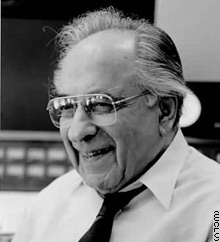
"Good bye, Mr. Haas."
"Adventures in Good Music" radio host, Karl Haas, died on February 7, 2005, and I just heard about it today. He hosted the educational program for almost 50 years. His trademark, "Hellllo, everyone" can still be heard on our local classical radio station. One of the articles I read said that he hadn't recorded any new programs in the last two years, so we were already listening to re-runs. I plan on checking around to see if any of them are available for purchase on CD.
24 January, 2005
~ Symphony Date ~
Hubby and I went out for our monthly Symphony date this weekend. We were pleased to hear the following:
Sibelius: Finlandia
Liszt: Piano Concerto No. 1
Sibelius: Legends From the Kalevala (aka Lemminkainen Legends)
Our program stated that the Legends are not performed much, at all. I certainly don't remember hearing it before. I have always loved Sibelius' "Finlandia," which contains within it the hymn we all know as "Be Still, My Soul." The French horn section played magnificently this weekend...full, rich, and clear. The bassoons were loud and clear, as well! It's not often that one can hear them so well above the rest of the orchestra. The hymn section was flawless and peaceful, from the flutes and oboes playing of it, to the cellos and violas repeating it.
The first movement of Sibelius' "Legends" contains a most impressive solo by the English Horn player. I don't recall a longer set of solos by one instrument in my years of visiting the symphony live, or in my years of playing flute and bassoon, and a basic study of music appreciation in high school and college.
The third movement is a little lifeless and slow, but the second and fourth are very nice. The Fourth contains a wave of melody that begins with the double basses, moves to the cellos, then flows seamlessly on to the viola section, to the first violin section, to be completed by the rest of the violins in the orchestra...at least, that was the interpretation done by Osmo Vänskä, visiting conductor. It was very impressive, and occured about three times in the fourth movement.
For more on Sibelius, click here: http://inkpot.com/classical/finlandia.html
The Liszt piece was played by 1997 Van Cliburn winner, Jon Nakamatsu, and was beautiful and very smooth. Flashy piano concertos are not Hubby's or my favorite thing, but it was very well-done, and easy to listen to. It brought to my mind memories of trickling streams and large waterfalls, (and this will sound cheesy, but it's true) like that of the Rhine River Falls (Rheinfalls) near Schaffhausen in Northern Switzerland. For an awesome aerial java-script photo, click here: http://www.rheinfall.com/Milan/index-e.html
Sibelius: Finlandia
Liszt: Piano Concerto No. 1
Sibelius: Legends From the Kalevala (aka Lemminkainen Legends)
Our program stated that the Legends are not performed much, at all. I certainly don't remember hearing it before. I have always loved Sibelius' "Finlandia," which contains within it the hymn we all know as "Be Still, My Soul." The French horn section played magnificently this weekend...full, rich, and clear. The bassoons were loud and clear, as well! It's not often that one can hear them so well above the rest of the orchestra. The hymn section was flawless and peaceful, from the flutes and oboes playing of it, to the cellos and violas repeating it.
The first movement of Sibelius' "Legends" contains a most impressive solo by the English Horn player. I don't recall a longer set of solos by one instrument in my years of visiting the symphony live, or in my years of playing flute and bassoon, and a basic study of music appreciation in high school and college.
The third movement is a little lifeless and slow, but the second and fourth are very nice. The Fourth contains a wave of melody that begins with the double basses, moves to the cellos, then flows seamlessly on to the viola section, to the first violin section, to be completed by the rest of the violins in the orchestra...at least, that was the interpretation done by Osmo Vänskä, visiting conductor. It was very impressive, and occured about three times in the fourth movement.
For more on Sibelius, click here: http://inkpot.com/classical/finlandia.html
The Liszt piece was played by 1997 Van Cliburn winner, Jon Nakamatsu, and was beautiful and very smooth. Flashy piano concertos are not Hubby's or my favorite thing, but it was very well-done, and easy to listen to. It brought to my mind memories of trickling streams and large waterfalls, (and this will sound cheesy, but it's true) like that of the Rhine River Falls (Rheinfalls) near Schaffhausen in Northern Switzerland. For an awesome aerial java-script photo, click here: http://www.rheinfall.com/Milan/index-e.html
It is fun to watch the different musicians on the stage. When they are pausing and waiting to play, different ones assume various restful poses. Some of the trumpet players cross their arms and/or hang their heads, looking as if they are napping. Others, like one of the trombonists, who is quite tall and lanky, look very much like a character from a Norman Rockwell painting! Once, we even looked on as the poor bass clarinetest, who had a substantial solo one night last year, grew very pale and had to leave after the piece being played was completed. He was back after intermission to finish playing the last set of the night. What a trooper!
Subscribe to:
Posts (Atom)
Selah is one of my favorite groups of singers/musicians. In their music, anyone can enjoy absolute perfection of harmonies, collection of tender thoughts, expressions of depth of soul and faith, (not to mention blends) like those I grew up in, around, through, between, over, under, you name it...from the time I could hear in the womb! (for those of you who are familiar with the studies on sounds, voices, music on infants before and after they are born, it is fascinating reading.)
I *MISS* this music from time to time and want to swim into the depths of it; the contemplative and sometimes soulful, sometimes utterly joyful moments which make time seem to stand still. Selah is one of several groups I will pop into my jam box from time to time to focus, meditate, or sing along with...that is in lieu of getting our friends together to sing and encourage one another together in person!
Christmas music (classic choral works) music is also high on my list of favorites. The time is drawing nigh! St. Olaf Choir, Andrea Bocelli, Handel's Messiah, here we come! (Thank you, Lord!)
Tell me, if you have some time, what music, what singing / worshipping in song mean to you? What is its purpose and what are the benefits?
Gleefully yours,
Javamom