We're watching one of my great nephews today. The boys wore him out and he fell asleep watching Veggie Tales.
The Annals of the extremely diverse, artistic, literary, and musical lifestyle of a Charlotte Mason education-loving family. Our philosophy, even though our children are all grown now, is to allow for time and space in each day to be present for those memorable moments; the ones both on and off the calendar.
"'Stay' is a charming word in a friend's vocabulary."
~Louisa May Alcott
14 December, 2006
Nap time
We're watching one of my great nephews today. The boys wore him out and he fell asleep watching Veggie Tales.
13 December, 2006
Etymology
I am currently putting together a syllabus for a class that I will be teaching next semester called "Word Feud." So on this relaxing day, when I should be decluttering my bedroom, I am instead researching word roots and games for said class. I found several interesting websites. Here is one with a giant list of Words, short phrases, and their explanations. Fun-with-words dot com is another fun one!
I would welcome any tips or references, if you have any to share! I also plan to use SAT prep word lists and word roots from various curriculae that I have in my home library from our 14 years (come January) of homeschooling.
Javamom
I would welcome any tips or references, if you have any to share! I also plan to use SAT prep word lists and word roots from various curriculae that I have in my home library from our 14 years (come January) of homeschooling.
Javamom
Knowledge
"If knowledge means so much to us, 'What is knowledge?' the reader asks. We can give only a negative answer. Knowledge is not instruction, information, scholarship, a well-stored memory. It is passed, like the light of a torch, from mind to mind, and the flame can be kindled at original minds only. Thought, we know, breeds thought; it is as vital thought touches our minds that our ideas are vitalized, and out of our ideas comes our conduct of life."
~Charlotte Mason (vol. 6 page 303)
Labels:
Book club,
Charlotte Mason,
Home Schooling,
Life long learning
12 December, 2006
My Mind to Me a Kingdom Is
Charlotte Mason says toward the end of her volume Towards a Philosophy of Education'
(on the bottom of page 321):
"Only as he has been and is nourished upon books is a man able to "live his life." A great deal of mechanical labour is necessarily performed in solitude; the miner, the farm-labourer, cannot think all the time of the block he is hewing, the furrow he is ploughing; how good that he should be figuring to himself the trial scene in the Heart of Midlothian, the "high-jinks" in Guy Mannering, that his imagination should be playing with 'Ann Page' or 'Mrs. Quickly,' or that his labour goes the better "because his secret soul a holy strain repeats." People, working people, do these things. Many a one can say out of a rich experience, "My mind to me a kingdom is"; many a one cries with (Robert) Browning's 'Paracelsus,' "God! Thou art mind! Unto the master-mind, Mind should be precious. Spare my mind alone!" We know how "Have mynde" appears on the tiles paving the choir of St. Cross; but "mynde," like body, must have its meat."
I thought at first that she was referencing Shakespeare, but alas, my first guess wrong! It is just about the same time period, however. I think she references these as examples of being alone, BUT not that that is always a good thing. Handling things alone and being completely self sufficient is not a good thing, hence the references, I believe. she goes on to stress that "The mind must have its meat," then when one is alone working, the mind will be thinking of literary things, stories, even Holy things. Her main beef, pardon the pun, is that (as she says on page 330):
"...our fault, our exceeding great fault, is that we keep our own minds and the minds of our children shamefully underfed."
So here I include the whole poem by Sir Edward Dyer, d 1607
My Mind to Me a Kingdom Is
Sir Edward Dyer (d. 1607)
MY mind to me a kingdom is;
Such present joys therein I find,
That it excels all other bliss
That earth affords or grows by kind:
Though much I want that most would have, (5)
Yet still my mind forbids to crave.
No princely pomp, no wealthy store,
No force to win the victory,
No wily wit to salve a sore,
No shape to feed a loving eye; (10)
To none of these I yield as thrall;
For why? my mind doth serve for all.
I see how plenty surfeits oft,
And hasty climbers soon do fall;
I see that those which are aloft (15)
Mishap doth threaten most of all:
They get with toil, they keep with fear:
Such cares my mind could never bear.
Content I live, this is my stay;
I seek no more than may suffice; (20)
I press to bear no haughty sway;
Look, what I lack my mind supplies.
Lo, thus I triumph like a king,
Content with that my mind doth bring.
Some have too much, yet still do crave; (25)
I little have, and seek no more.
They are but poor, though much they have,
And I am rich with little store;
They poor, I rich; they beg, I give;
They lack, I leave; they pine, I live. (30)
I laugh not at another’s loss,
I grudge not at another’s gain;
No worldly waves my mind can toss;
My state at one doth still remain:
I fear no foe, I fawn no friend; (35)
I loathe not life, nor dread my end.
Some weigh their pleasure by their lust,
Their wisdom by their rage of will;
Their treasure is their only trust,
A cloakèd craft their store of skill; (40)
But all the pleasure that I find
Is to maintain a quiet mind.
My wealth is health and perfect ease,
My conscience clear my chief defence;
I neither seek by bribes to please, (45)
Nor by deceit to breed offence:
Thus do I live; thus will I die;
Would all did so as well as I!
I believe her (brief) references to these in her writing are negative references of how NOT to be. She does that a lot in her writing.
Now for the Paracelsus reference.
(from the linked website above)
"Paracelsus is a study of intellectual pride and its humbling. The philosopher, conscious of his mission to arouse society with 'new revealings,' places entire confidence in his individual powers, and thereby repudiates both the guidance of tradition and the support of love, as personified by Festus and Michal. Festus repeatedly warns him of the danger of trying to do without human sympathy: 'How can that course be safe which from the first/ Produces carelessness to human love?'; and again: 'But do not cut yourself from human weal!' Paracelsus, however, sets off alone on his wanderings, strong in the conviction that he is sufficient unto himself and that ultimate truth has its seat in the depths of his inner consciousness.
Paracelsus is divided into five sections to suggest the stages in the hero's tragic progress. In the second part there begins for Paracelsus the betrayal by the intellect, although he continues to insist that this is the supreme faculy:
"God! Thou art mind! Unto the master-mind
"Mind should be precious.
Spare my mind alone!
All else I will endure. . . ""
Yet another stanza says:
"My nature cannot lose her first imprint;
I still must hoard and heap and class all truths
With one ulterior purpose: I must know!"
and then the realization that his failure may be attributable to pride of intellect:
"... were man all mind-he gains A station little enviable. From God[75/76]
Down to the lowest spirit ministrant,
Intelligence exists which casts our mind
Into immeasurable shade. No, no:
Love, hope, fear, faith-these make humanity;
These are its sign and note and character,
And these I have lost!"
This is one I need to explore more deeply. Makes my brain hurt sometimes :-)
Javamom
(on the bottom of page 321):
"Only as he has been and is nourished upon books is a man able to "live his life." A great deal of mechanical labour is necessarily performed in solitude; the miner, the farm-labourer, cannot think all the time of the block he is hewing, the furrow he is ploughing; how good that he should be figuring to himself the trial scene in the Heart of Midlothian, the "high-jinks" in Guy Mannering, that his imagination should be playing with 'Ann Page' or 'Mrs. Quickly,' or that his labour goes the better "because his secret soul a holy strain repeats." People, working people, do these things. Many a one can say out of a rich experience, "My mind to me a kingdom is"; many a one cries with (Robert) Browning's 'Paracelsus,' "God! Thou art mind! Unto the master-mind, Mind should be precious. Spare my mind alone!" We know how "Have mynde" appears on the tiles paving the choir of St. Cross; but "mynde," like body, must have its meat."
I thought at first that she was referencing Shakespeare, but alas, my first guess wrong! It is just about the same time period, however. I think she references these as examples of being alone, BUT not that that is always a good thing. Handling things alone and being completely self sufficient is not a good thing, hence the references, I believe. she goes on to stress that "The mind must have its meat," then when one is alone working, the mind will be thinking of literary things, stories, even Holy things. Her main beef, pardon the pun, is that (as she says on page 330):
"...our fault, our exceeding great fault, is that we keep our own minds and the minds of our children shamefully underfed."
So here I include the whole poem by Sir Edward Dyer, d 1607
My Mind to Me a Kingdom Is
Sir Edward Dyer (d. 1607)
MY mind to me a kingdom is;
Such present joys therein I find,
That it excels all other bliss
That earth affords or grows by kind:
Though much I want that most would have, (5)
Yet still my mind forbids to crave.
No princely pomp, no wealthy store,
No force to win the victory,
No wily wit to salve a sore,
No shape to feed a loving eye; (10)
To none of these I yield as thrall;
For why? my mind doth serve for all.
I see how plenty surfeits oft,
And hasty climbers soon do fall;
I see that those which are aloft (15)
Mishap doth threaten most of all:
They get with toil, they keep with fear:
Such cares my mind could never bear.
Content I live, this is my stay;
I seek no more than may suffice; (20)
I press to bear no haughty sway;
Look, what I lack my mind supplies.
Lo, thus I triumph like a king,
Content with that my mind doth bring.
Some have too much, yet still do crave; (25)
I little have, and seek no more.
They are but poor, though much they have,
And I am rich with little store;
They poor, I rich; they beg, I give;
They lack, I leave; they pine, I live. (30)
I laugh not at another’s loss,
I grudge not at another’s gain;
No worldly waves my mind can toss;
My state at one doth still remain:
I fear no foe, I fawn no friend; (35)
I loathe not life, nor dread my end.
Some weigh their pleasure by their lust,
Their wisdom by their rage of will;
Their treasure is their only trust,
A cloakèd craft their store of skill; (40)
But all the pleasure that I find
Is to maintain a quiet mind.
My wealth is health and perfect ease,
My conscience clear my chief defence;
I neither seek by bribes to please, (45)
Nor by deceit to breed offence:
Thus do I live; thus will I die;
Would all did so as well as I!
I believe her (brief) references to these in her writing are negative references of how NOT to be. She does that a lot in her writing.
Now for the Paracelsus reference.
(from the linked website above)
"Paracelsus is a study of intellectual pride and its humbling. The philosopher, conscious of his mission to arouse society with 'new revealings,' places entire confidence in his individual powers, and thereby repudiates both the guidance of tradition and the support of love, as personified by Festus and Michal. Festus repeatedly warns him of the danger of trying to do without human sympathy: 'How can that course be safe which from the first/ Produces carelessness to human love?'; and again: 'But do not cut yourself from human weal!' Paracelsus, however, sets off alone on his wanderings, strong in the conviction that he is sufficient unto himself and that ultimate truth has its seat in the depths of his inner consciousness.
Paracelsus is divided into five sections to suggest the stages in the hero's tragic progress. In the second part there begins for Paracelsus the betrayal by the intellect, although he continues to insist that this is the supreme faculy:
"God! Thou art mind! Unto the master-mind
"Mind should be precious.
Spare my mind alone!
All else I will endure. . . ""
Yet another stanza says:
"My nature cannot lose her first imprint;
I still must hoard and heap and class all truths
With one ulterior purpose: I must know!"
and then the realization that his failure may be attributable to pride of intellect:
"... were man all mind-he gains A station little enviable. From God[75/76]
Down to the lowest spirit ministrant,
Intelligence exists which casts our mind
Into immeasurable shade. No, no:
Love, hope, fear, faith-these make humanity;
These are its sign and note and character,
And these I have lost!"
This is one I need to explore more deeply. Makes my brain hurt sometimes :-)
Javamom
Labels:
Book club,
Charlotte Mason,
Home Schooling,
Life long learning
08 December, 2006
OC Bookworm? Who, me?
| What Kind of Reader Are You? Your Result: Obsessive-Compulsive Bookworm You're probably in the final stages of a Ph.D. or otherwise finding a way to make your living out of reading. You are one of the literati. Other people's grammatical mistakes make you insane. | |
| Dedicated Reader | |
| Literate Good Citizen | |
| Book Snob | |
| Non-Reader | |
| Fad Reader | |
| What Kind of Reader Are You? Create Your Own Quiz | |
Hat tip ~ Dawn ;)
05 December, 2006
Great Thoughts Anticipate Great Works
My book club will finish reading Towards a Philosophy of Education by Charlotte M. Mason this month. It has taken twenty one months, reading a chapter per month but this has allowed us the time to let it settle deeply within; to be able to chew on it slowly and savor it. I have enjoyed digging deeper into the literary references and in the meaning of her words and oft-times her paragraph-long sentences. She was a Victorian/Edwardian-era Brit, afterall!
She writes:
"The Greeks believed that a training in the use and power of words was the chief part of education, recognising that if the thought fathers the word so does the word in turn father the thought. They concerned themselves with no language, ancient or modern, save their own, but of that they acquired a consummate appreciation. With their words came great thoughts, expressed in whatever way the emergencies of the state called for--in wise laws, victorious battles, glorious
temples, sculpture, drama. For great thoughts anticipate great works; and these come only to a people conversant with the great thoughts that have been written and said."
Then she goes on to say, "In what strength did the youngest and greatest of our Premiers bring about the "revival of England"? He was fortified by illimitable reading, by a present sense of a thousand impossibilities that had been brought to pass––of a thousand things so wisely said that wise action was a necessary outcome. To say that we as a nation are suffering from our contemptuous depreciation of knowledge is to say that we scorn Letters, the proper vehicle of all knowledge."
~Charlotte Mason (1842-1923), Towards a Philosophy of Education, (Volume 6 page 316)
She writes:
"The Greeks believed that a training in the use and power of words was the chief part of education, recognising that if the thought fathers the word so does the word in turn father the thought. They concerned themselves with no language, ancient or modern, save their own, but of that they acquired a consummate appreciation. With their words came great thoughts, expressed in whatever way the emergencies of the state called for--in wise laws, victorious battles, glorious
temples, sculpture, drama. For great thoughts anticipate great works; and these come only to a people conversant with the great thoughts that have been written and said."
Then she goes on to say, "In what strength did the youngest and greatest of our Premiers bring about the "revival of England"? He was fortified by illimitable reading, by a present sense of a thousand impossibilities that had been brought to pass––of a thousand things so wisely said that wise action was a necessary outcome. To say that we as a nation are suffering from our contemptuous depreciation of knowledge is to say that we scorn Letters, the proper vehicle of all knowledge."
~Charlotte Mason (1842-1923), Towards a Philosophy of Education, (Volume 6 page 316)
Labels:
Book club,
Charlotte Mason,
Home Schooling,
Life long learning
02 December, 2006
OU Wins!
Oklahoma Sooners 21, Nebraska 7
What a fantastic game for quarterback Paul Thompson and the OU defensive line--Now it's on to the Fiesta Bowl! This is a nice reward for a hard-played, tough year for OU, including and most especially because of the Oregon game that the Refs took from OU. It will be good to see Adrienne Peterson back in the game again, although it seems that his injury may have enabled a lot of other young players to step up and play better. Maybe it was just good coaching. Who knows? I'm just a mom...who grew up in a household of OU fans, who married a Texan, who has three growing sons and at least ONE of them is an OU fan. I now have someone in my own home to watch the games with again! Yes!!
Sooner Javamom, who is a Genuine Okie from Muskogee
P.S. Go Cowboys...who beat the Giants 23-20 with one second left in the game!
What a fantastic game for quarterback Paul Thompson and the OU defensive line--Now it's on to the Fiesta Bowl! This is a nice reward for a hard-played, tough year for OU, including and most especially because of the Oregon game that the Refs took from OU. It will be good to see Adrienne Peterson back in the game again, although it seems that his injury may have enabled a lot of other young players to step up and play better. Maybe it was just good coaching. Who knows? I'm just a mom...who grew up in a household of OU fans, who married a Texan, who has three growing sons and at least ONE of them is an OU fan. I now have someone in my own home to watch the games with again! Yes!!
Sooner Javamom, who is a Genuine Okie from Muskogee
P.S. Go Cowboys...who beat the Giants 23-20 with one second left in the game!
29 November, 2006
The last Sunflowers

The arctic blast is arriving in TX! I cut a bunch of the last crop of small sunflowers that have continued to thrive in our warm TX autumn almost to December! I snipped them by the roadside tonight, while on the way back from dropping off my three teens and their little brother at youth group. I wanted to bring some sunshine into the house, since the temps dropped 30 degrees (from 78-48 just in the 30 minutes that I was out)! Tigga-ma-jig is checking them out. These are my favorite yellow wildflowers.
Off to sip some warm coffee after eating nachos.
Javamom
26 November, 2006
Inspired by Coffee Art
While visiting nephews and their families this past week, we went to a beautiful coffee shop just outside of Tulsa. The atmosphere of this place, Nordaggio's, was simple but stunning, with hints of Old-World charm; Venetian Plaster and dark wood tables and leather couches. It also could have had something to do with their counter filled with multiple flavors of *real* Italian Ice...YUM!
Another charming characteristic of this cafe was the sepia-toned, framed watercolor art on the walls. You can visit Karen's online gallery, and purchase some of your own coffee art, or be inspired by it, as I am, to try your hand at making your own! Our youngest son immediately recognized the art, since we've spent time with some of Van Gogh's works this fall.
My favorites from Coffee-Art: Cafe Terrace, The Lady of Chocolat, and Mona Latte...and there is just something about Nighthawks (the real version by E. Hopper) that I have always liked. It reminds me of pre-dawn life in a big city, like Chicago or Boston.
Enjoy and get creative!
Javamom
Another charming characteristic of this cafe was the sepia-toned, framed watercolor art on the walls. You can visit Karen's online gallery, and purchase some of your own coffee art, or be inspired by it, as I am, to try your hand at making your own! Our youngest son immediately recognized the art, since we've spent time with some of Van Gogh's works this fall.
My favorites from Coffee-Art: Cafe Terrace, The Lady of Chocolat, and Mona Latte...and there is just something about Nighthawks (the real version by E. Hopper) that I have always liked. It reminds me of pre-dawn life in a big city, like Chicago or Boston.
Enjoy and get creative!
Javamom
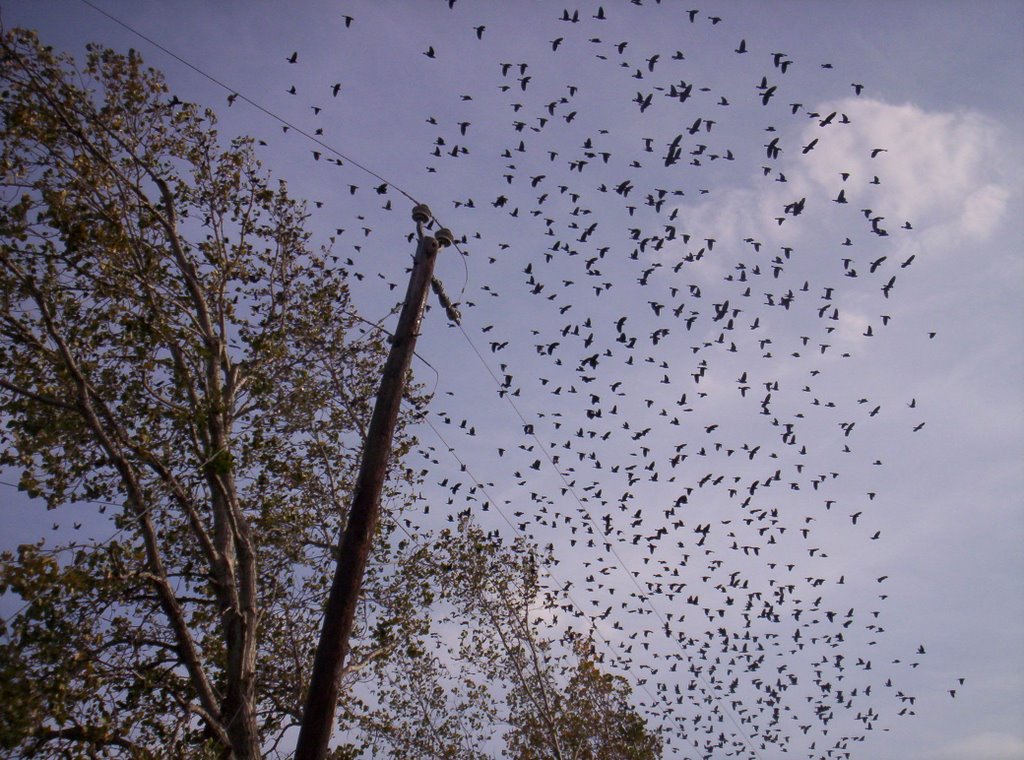
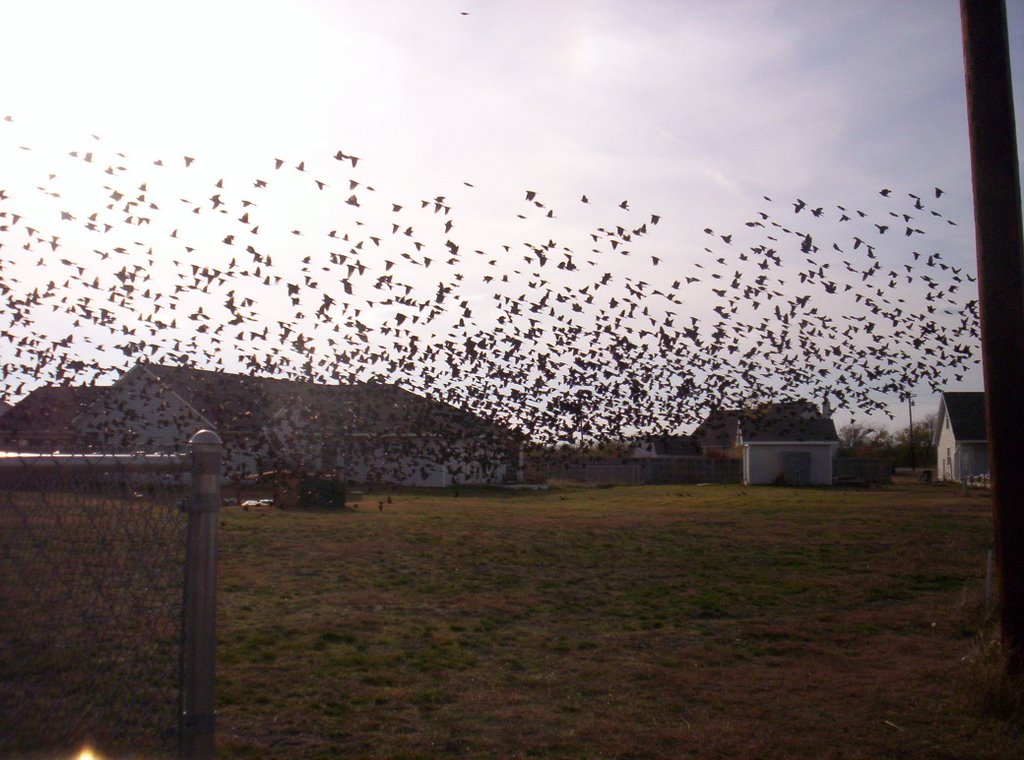
The Birds!
Subscribe to:
Posts (Atom)